





Call Us! +65 6219 9548
info@gardendental.sg


491 Bukit Timah Rd #B1-02
Botanic Gardens MRT


Mon, Wed, Sat 9am-6pm
Tue, Thu 9am-7pm · Fri 9am-8pm
When Might Your Elderly Parent Need Dentures?
Age alone does not determine whether someone needs dentures. Our dentists will assess how many teeth are missing, the condition of the remaining teeth and gums, and how tooth loss is affecting everyday function.
Your parent may benefit from a denture assessment if they:
- Have several or all teeth missing
- Have difficulty biting or chewing certain foods
- Have remaining teeth that cannot be predictably restored
- Have gaps that affect speech or everyday comfort
- Already wear dentures that have become loose or uncomfortable
- Experience recurring sore spots from an existing denture
A dentist should also check for conditions such as tooth decay or gum disease before planning a new denture.
Why Replacing Missing Teeth Matters for Seniors
Missing teeth can affect more than appearance. They can make chewing difficult, limit the foods your parents feel comfortable eating and affect their overall quality of life. For seniors who have lost all their teeth, dentures may help improve chewing function and oral health-related quality of life.
Difficulty chewing can also influence food choices and nutritional intake, which can be especially important for older adults who already have trouble eating. Tooth loss and reduced chewing ability have been linked with nutritional concerns in older adults, although many other factors can affect nutrition.
A well-fitted denture can help your parent chew more comfortably and manage a wider range of foods. Among frail older adults, new complete dentures have also been associated with better chewing ability and oral health-related quality of life.
Types of Dentures for Elderly Patients
The right denture depends on your parent’s missing and remaining teeth, gum health, dexterity, oral hygiene and treatment needs.
Full Dentures
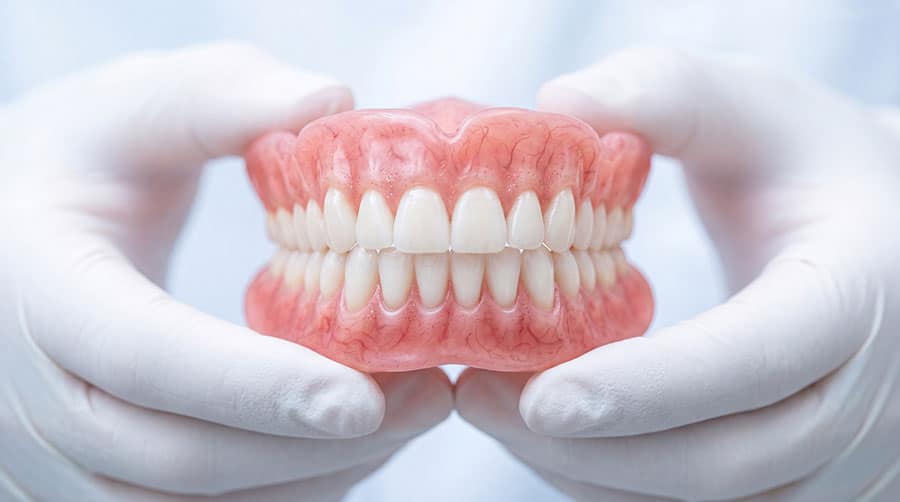
If your parent has lost all their natural teeth in the upper or lower jaw, or both, full dentures are a common option in Singapore for replacing a complete row of missing teeth. They sit over the gums and are made to fit your parent’s mouth, with adjustments made as needed for comfort and fit.
Partial Dentures
Partial dentures may suit elderly patients in Singapore who still have some healthy natural teeth. They replace only the missing teeth and use the remaining teeth for support, helping preserve as much of your parent’s natural smile as possible.
Flexible Dentures
Flexible dentures use a flexible thermoplastic material instead of the rigid acrylic commonly used for conventional dentures. They can replace missing teeth in certain cases and may feel lighter or less rigid in the mouth.
However, flexibility does not make them suitable for everyone. Their use depends on factors such as the location and number of missing teeth and your parent’s overall oral condition.
Immediate Dentures
If your parent needs teeth extracted but does not want to spend the healing period without replacement teeth, an immediate denture may be an option.
The dentist takes measurements or impressions while your parent’s existing teeth are still in place, allowing the immediate denture to be made before the extraction appointment.
On extraction day, the dentist removes the required teeth and fits the prepared denture straight away, so your parent has replacement teeth throughout the healing period.
As the mouth heals, changes to the jaw ridge can affect how the denture fits. Adjustments or relining may therefore be needed over time.
Wondering which type of denture may suit your parent? Contact us to book an appointment for a personalised assessment.
Which Denture Option Is Suitable for Elderly Patients?
For elderly patients, choosing a denture is not only about replacing missing teeth. Your parent’s ability to insert, remove and clean the denture comfortably also matters, particularly if they have reduced dexterity or need help with daily oral care.
The dentist can also take into account your parent’s existing health conditions, previous experience with dentures and any difficulties they have with eating or speaking. These factors help determine an option that is practical for your parent’s everyday needs.
When Should Old Dentures Be Checked or Replaced?
Dentures do not necessarily continue fitting the same way indefinitely. The residual ridge that supports a denture can gradually change following tooth loss, which may affect how well an existing denture fits.
However, loose dentures do not always mean an entirely new denture is required. Depending on the condition of the denture and mouth, the dentist may consider adjustment, repair or relining.
Signs that an existing denture should be assessed include:
- Dentures moving or slipping while eating or speaking
- Persistent sore areas
- Difficulty chewing foods that were previously manageable
- Cracks, worn teeth or other damage
- Changes in the way the upper and lower teeth meet
- Increasing difficulty keeping the denture stable
Denture Costs and Subsidies for Elderly Patients in Singapore
The cost of dentures in Singapore varies depending on the type of denture, material, number of teeth being replaced, and your parent’s treatment needs.
Eligible patients may receive CHAS subsidies for dentures in Singapore, including complete and partial removable dentures, relines and repairs, subject to current eligibility and claim limits.
The final cost will depend on your parent’s treatment needs and applicable denture subsidy in Singapore.
Book a Denture Assessment for an Elderly Parent
If your parent has missing teeth, difficulty chewing or an existing denture that has become uncomfortable, a dental assessment can help identify the problem and determine which treatment options may be appropriate.
Garden Dental is located at 491 Bukit Timah Road, inside Botanic Gardens MRT (#B1-02), near Exit B, and is accessible by public transport. WhatsApp Garden Dental or book an appointment.
Frequently Asked Questions About Dentures for Elderly Patients
Can elderly patients get dentures?
Yes. Age alone does not rule out denture treatment. Suitability depends on the patient’s oral condition, remaining teeth, gums and individual treatment needs. A dental examination is required before deciding on an appropriate denture.
Can elderly patients get dentures if they still have some natural teeth?
Yes. Partial dentures are designed to replace missing teeth when suitable natural teeth remain. The dentist will assess whether the remaining teeth are healthy and stable enough to be retained.
What should I do if my parent's dentures are loose?
Arrange a dental review. Loose dentures can occur as the tissues supporting the denture change over time. Depending on the cause and condition of the existing denture, adjustment, relining, repair or replacement may be considered.
How long does it take to make dentures?
The timeframe depends on the type of denture and the patient’s oral condition. Conventional dentures generally involve several stages, including assessment, impressions, trial fittings and final fitting. If teeth need to be removed first, the treatment sequence may also affect the overall timeframe.
Can dentures be fitted immediately after tooth extraction?
In suitable cases, yes. Immediate dentures are prepared before the extraction appointment and fitted immediately after the planned teeth are removed. They are not made from start to finish on extraction day. Because the gums and supporting tissues change during healing, follow-up adjustments or relining may be required.
Are denture subsidies available for elderly patients in Singapore?
Yes, for eligible patients. CHAS subsidies may apply to complete or partial removable dentures, as well as certain denture repairs and relines, subject to current eligibility requirements and claim limits. Current CHAS coverage in Singapore includes these removable denture services.